 CONSUMER SERVICES

Rahul Poral - April 24, 2026
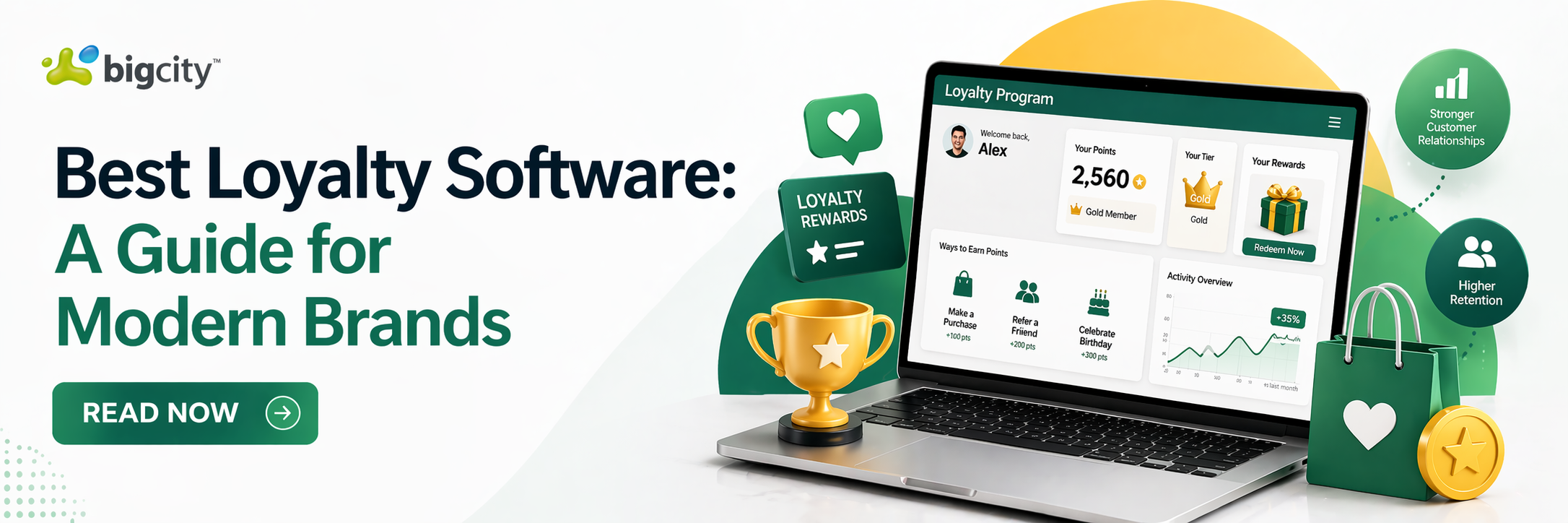

Loyalty, as most brands understand it, is broken.
Points are issued. Rewards are redeemed. Campaigns run. And yet, engagement drops the moment the campaign ends.
That’s because loyalty has been treated as a program—not as a system.
In 2026, the brands that win are not the ones running better loyalty campaigns.
They are the ones building always-on engagement infrastructure.
And that shift starts with how you evaluate loyalty management software.
Traditionally, customer loyalty software refers to platforms that enable:
– Points-based systems
– Tiered memberships
– Referral programs
– Reward distribution
But this definition is no longer enough.
Modern loyalty management software are behaviour engines—systems that influence how customers interact with your brand across their lifecycle, not just after a purchase.
Any brand that depends on repeat behaviour, channel engagement, or ecosystem loyalty—not just one-time transactions.
This cuts across both digital-first and traditional industries:
– E-commerce & D2C brands: Drive repeat purchases, increase basket size, and build direct customer relationships
– Retail chains & QSR: Enable store-level loyalty, cross-category engagement, and footfall consistency
– FMCG brands: Stay connected between purchase cycles and influence retailer + consumer behaviour
– BFSI & fintech platforms: Build usage habits, improve retention, and drive product adoption
– Telecom & digital platforms: Reduce churn and increase engagement frequency
But more importantly, loyalty is becoming critical in traditionally underserved sectors:
– Oil & gas companies: Drive repeat visits, fuel station preference, and partner ecosystem engagement
– Automotive brands & dealerships: Build post-purchase engagement, service loyalty, and upgrade cycles
– Cement & building materials: Engage dealers, contractors, and influencers across long purchase cycles
– Durables & electronics: Incentivise channel partners, drive sell-through, and reward end consumers
– Pharma & healthcare: Strengthen practitioner and consumer engagement within regulatory boundaries
Across these sectors, the role of loyalty is not just customer retention—it is:
– Driving channel behaviour
– Influencing purchase decisions
– Building long-term ecosystem stickiness
This is where most decisions go wrong.
– Off-the-shelf tools offer quick setup—basic points, referrals, and templated journeys.
– Enterprise customer loyalty software are built for complexity—multiple segments, channels, behaviours, and campaigns.
But the real difference is this:
👉 Tools help you run programs
👉 Platforms help you build continuous engagement systems
And that distinction defines long-term ROI.
The expectations from loyalty management software have fundamentally changed. Features alone are no longer enough.
What matters is how well the system fits into your broader engagement strategy.
Points, tiers, and referrals are baseline.
What matters is:
– Can you reward behaviours beyond transactions?
– Can you create dynamic, evolving loyalty journeys?
– Can your team launch and modify campaigns without heavy tech dependency?
Because loyalty today is iterative—and rigid loyalty program software slow you down.
Loyalty is shifting from uniform rewards to contextual experiences.
The platform should enable:
– Real-time segmentation
– Behaviour-based triggers
– Personalised reward recommendations
The shift is clear:
👉 From rewarding everyone the same → to engaging each user differently
Customers don’t operate in silos. Most loyalty systems still do.
Your platform must work seamlessly across:
– Web
– Mobile apps
– In-store/POS
– CRM and communication layers
Fragmented systems lead to fragmented experiences—and lost engagement.
A loyalty platform is only as powerful as what it connects with.
Look for integrations with:
– Shopify, BigCommerce
– CRM systems
– Email and SMS tools
– Data and analytics platforms
Because loyalty doesn’t sit on top—it sits within your ecosystem.
One of the biggest gaps in loyalty programs is measurement.
A strong platform should clearly show:
– Behavioural impact
– Campaign effectiveness
– Reward performance
– Contribution to retention and revenue
If ROI is not visible, loyalty becomes a cost centre instead of a growth driver.
Most brands optimise for cost of entry. Few plan for cost of scale.
As your program grows:
– User base increases
– Campaign complexity increases
– Reward fulfilment expands
Your platform should scale without:
– Operational friction
– Rising inefficiencies
– Hidden costs
The real metric isn’t price—it’s sustained efficiency at scale.
The right questions don’t just evaluate features—they reveal future constraints.
– Does it support all our channels—web, mobile, in-store?
– What is the onboarding timeline and operational complexity?
– How does it handle data privacy and regional compliance?
– Can it scale with our growth in users and campaigns?
– Does it support gamification and behaviour-led engagement?
But most importantly:
👉 Does it work as a standalone tool—or as part of a larger engagement system?
Most loyalty platforms are built as feature sets. BigCity is built as an engagement infrastructure. That distinction matters—especially in a market like India.
Most brands today operate with disconnected systems:
– Campaign tools
– Reward vendors
– Loyalty engines
– Analytics dashboards
Each works—but in isolation.
BigCity brings these together into a unified platform, combining:
– Loyalty program management
– Campaign automation
– Rewards infrastructure
– Gamification layers
This allows brands to move from:
👉 Fragmented execution → to integrated engagement systems
Most loyalty platforms treat rewards as an add-on. BigCity treats it as core infrastructure.
Through its extensive partner ecosystem, the platform enables:
– Access to a large, curated reward catalogue
– Regional and segment-specific reward options
– Seamless fulfilment and distribution
This is critical because:
👉 Loyalty programs don’t fail due to mechanics—they fail due to irrelevant or poorly executed rewards
BigCity solves this at scale.
In most systems, campaigns and loyalty operate separately. BigCity integrates them.
This means:
– Campaigns can trigger rewards in real time
– User behaviour directly drives engagement journeys
– Loyalty is not periodic—it becomes continuous
👉 This is how brands move from campaign-led engagement → to always-on engagement.
Gamification is often treated as a feature. Here, it is a strategy layer.
BigCity enables:
– Challenges and milestones
– Progress-based engagement
– Habit-forming interaction loops
This is especially critical for sectors like BFSI and fintech, where:
👉 The goal is not just transactions—but consistent user behaviour
India is not a standardised market—and loyalty program software built for global use cases often fall short.
BigCity is designed for:
– Regional diversity in rewards
– Local merchant ecosystems
– Varied customer behaviours across segments
This ensures that engagement strategies are not just scalable—but relevant.
What ultimately sets BigCity apart is its system-level thinking.
It enables brands to:
– Engage users continuously—not just during campaigns
– Incentivise behaviour across the lifecycle
– Measure and optimise engagement in real time
This shifts loyalty from:
👉 A periodic marketing initiative
to
👉 A core growth infrastructure
Most brands don’t struggle with loyalty because they lack features. They struggle because their systems are fragmented, reactive, and campaign-led.
The future of loyalty lies in:
– Continuous engagement
– Behaviour-driven systems
– Integrated platforms
And the platforms that will define this future are not those that manage points better—but those that:
– Unify engagement layers
– Enable real-time interaction
– Deliver measurable ROI at scale
A promotech company specializing in tactical and loyalty campaigns, offering Retailer Programs, Influencer Programs, Distributor Programs, and Sales loyalty Programs. We leverage rewards, engagement-based technology, and loyalty strategies backed by AI and insights.











© 2026 Premier Sales Promotions Pvt. Ltd. All rights reserved.
 TRADE PLATFORMS