 CONSUMER SERVICES

Rahul Poral - June 11, 2026
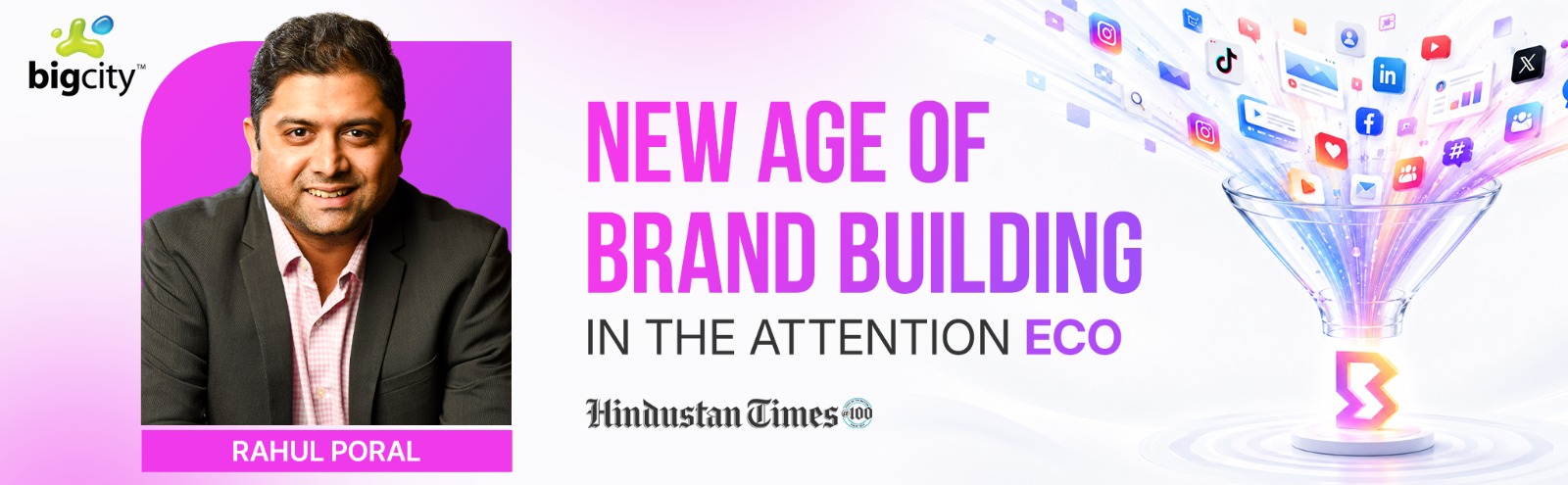

Modern marketing no longer suffers from a lack of visibility. It suffers from an excess of noise. Consumers today move through a relentless stream of advertisements, notifications, influencer campaigns, branded entertainment, and algorithmically targeted content that competes for attention every second of the day. In such an environment, the challenge for brands is not simply to be seen, but to become memorable enough to influence behaviour.
This shift has fundamentally altered the nature of brand building. Traditional advertising was built on repetition and reach. The assumption was straightforward: The more often consumers saw a brand, the more likely they were to trust and eventually purchase from it. While visibility still matters, modern audiences have become increasingly resistant to passive advertising. Familiarity alone rarely guarantees engagement. Consumers now expect participation, relevance, and immediacy.
As a result, brands are moving away from static campaigns towards dynamic experiences that encourage interaction. Marketing is becoming less about broadcasting messages and more about creating behavioural triggers. The most successful campaigns are those that convert emotional moments into immediate consumer action, whether through rewards, gamified participation, personalised offers, or real-time engagement.
The rise of digital ecosystems has accelerated this transformation. Smartphones have turned every consumer into an active participant rather than a passive viewer. Social media platforms reward instant reactions, live commentary, and communal experiences. The second screen has become just as important as the first. While watching entertainment or sport, audiences are simultaneously browsing, posting, scanning, purchasing, and interacting with brands in real time.
Large cultural events have become especially valuable within this environment because they combine scale with emotional intensity. Sporting tournaments, music festivals, and live entertainment events create collective experiences where millions of people engage simultaneously. For marketers, these moments provide rare opportunities to capture heightened attention and influence behaviour while emotions are at their peak.
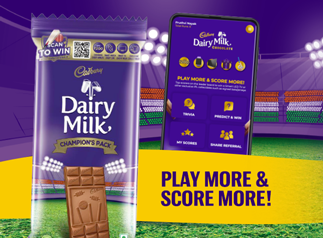
The Indian Premier League has become one of the clearest examples of this shift. During IPL seasons, brands no longer rely only on television commercials or sponsorship logos. Many now integrate rewards, live predictions, QR-based participation, and real-time digital activations tied directly to match moments. A boundary, wicket, or powerplay can instantly become a trigger for consumer engagement and transactions.
This transformation reflects a broader trend within marketing: the rise of gamification and reward-driven engagement. Consumers increasingly respond to systems that offer participation incentives, emotional gratification, and measurable outcomes. A simple interaction — scanning a code, predicting a result, redeeming a reward — creates a sense of involvement that traditional advertising often fails to achieve. These small acts of participation matter because they create psychological investment.
What appears insignificant in isolation becomes powerful through repetition. Micro-engagements build habit loops. A consumer who participates once is more likely to participate again. Over time, repeated interactions create familiarity, loyalty, and behavioural conditioning. This is one of the reasons why brands are increasingly prioritising retention and engagement metrics over raw impressions or reach.
The growing importance of personalisation has further reshaped the marketing landscape. Consumers are now accustomed to tailored digital experiences across streaming platforms, e-commerce apps, and social media feeds. Generic campaigns feel increasingly outdated in comparison. Brands that use behavioural data to deliver relevant experiences are more likely to sustain long-term engagement than those relying solely on mass-market messaging.
Data has, therefore, become one of the most valuable assets in contemporary advertising. Every click, scan, transaction, prediction, or interaction generates behavioural intelligence. Unlike traditional demographic research, behavioural data reveals what consumers actually do rather than what they claim to prefer. This allows brands to refine targeting, improve customer retention, personalise rewards, and optimise future campaigns with far greater precision.
The commercial importance of first-party data has become especially significant as digital privacy regulations tighten globally. Brands can no longer depend entirely on third-party tracking systems to understand their audiences. Interactive campaigns, loyalty programmes, and reward ecosystems now function not only as engagement tools but also as mechanisms for collecting long-term consumer intelligence.
At the same time, the infrastructure required to sustain these experiences has become increasingly sophisticated. Real-time engagement campaigns demand integrated technology platforms capable of handling live triggers, dynamic personalisation, transaction tracking, and performance measurement simultaneously. Marketing today is as much a technological operation as it is a creative one.
This evolution also reflects a deeper cultural shift in the relationship between commerce and entertainment. Audiences no longer consume content separately from consumption itself. Entertainment, shopping, participation, and social interaction now exist within a single interconnected ecosystem. Consumers expect experiences that feel immersive rather than interruptive.
In this environment, the brands that succeed are rarely the loudest. They are the ones that understand timing, participation, emotional context, and behavioural design. Visibility may create awareness, but engagement creates memory. And in the modern attention economy, memory remains the most valuable currency of all.
A promotech company specializing in tactical and loyalty campaigns, offering Retailer Programs, Influencer Programs, Distributor Programs, and Sales loyalty Programs. We leverage rewards, engagement-based technology, and loyalty strategies backed by AI and insights.











© 2026 Premier Sales Promotions Pvt. Ltd. All rights reserved.
 TRADE PLATFORMS