 CONSUMER SERVICES

Rahul Poral - July 9, 2026
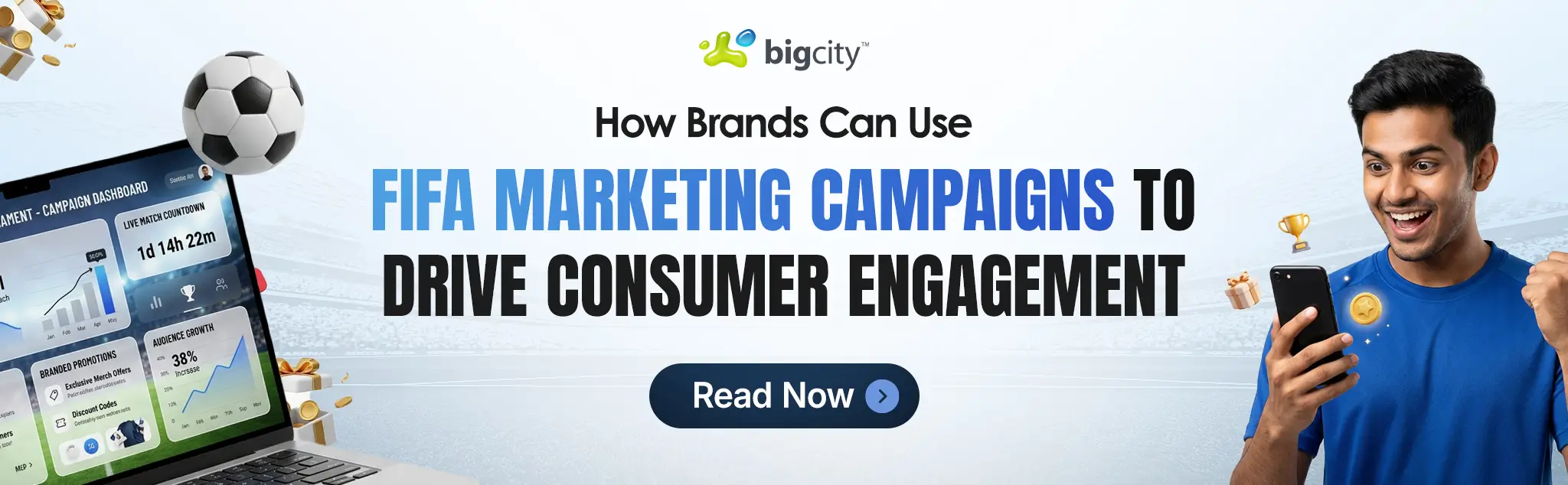

FIFA and World Cup-led marketing campaigns give brands a strong opportunity to turn live sports attention into consumer engagement, participation, loyalty and sales. For consumer brands, football is not just a visibility moment. It is a chance to create action through contests, rewards, referrals, match-day offers and gamified participation.
FIFA marketing campaigns work because football has mass audience appeal across age groups, regions and consumer segments. Match moments also create high-intent engagement windows, especially before kick-off, during half-time and after big results.
Fans are emotionally invested, which makes them more likely to predict scores, vote for teams, join challenges or claim rewards. These sports marketing campaigns can also connect online and offline channels through apps, WhatsApp, retail QR codes, websites and in-store promotions. When brands add a gamified rewards campaign, participation becomes easier, repeatable and more measurable.
A FIFA marketing campaign is a brand-led promotion built around football tournaments, match moments, fan behaviour, predictions, contests, rewards or match-day experiences.
These campaigns work best when the brand creates a relevant reason to participate instead of forcing football references into generic promotions. A snack brand, retailer, bank, food delivery app or electronics brand can all use football differently, as long as the campaign mechanic fits the consumer journey.
Brands can build FIFA marketing campaigns using simple, mobile-first mechanics such as prediction-based contests, match-day rewards, scratch cards, spin-the-wheel campaigns, trivia and quiz campaigns, and limited-time offers during matches.
Other strong World Cup marketing ideas include referral campaigns around team support, retail and in-store football promotions, and social media fan challenges. The best football marketing campaigns make participation quick, rewarding and easy to share.
FIFA campaigns help brands increase campaign participation by giving consumers a timely reason to act. They can improve repeat visits across an app, website or store by linking rewards to multiple match days.
They also help build first-party data through opt-in participation, encourage social sharing and referrals, create urgency through match-based timelines, and strengthen brand recall during high-attention moments. Instead of measuring only impressions, brands can track entries, redemptions, repeat visits, referrals and purchases.
Rewards make fan engagement strategy more action-oriented. Brands can offer instant rewards for participation, bonus points for repeat engagement, leaderboards for predictions and quizzes, and tiered rewards for higher participation.
Cashback, coupons or wallet points can be linked to match-day purchases. Loyal customers can receive exclusive rewards, early access, bonus entries or premium experiences. The key is to keep the reward relevant to the audience and easy to redeem.
Useful channels include WhatsApp campaigns, app push notifications, email campaigns, social media contests, retail QR code campaigns, website landing pages, and influencer or creator-led football challenges.
For stronger performance, brands should connect these channels into one participation flow. For example, a QR code on pack can lead to a landing page, trigger a WhatsApp update, and reward repeat participation after each match.
FMCG brands can run match-day snack bundles, instant win campaigns and QR-code rewards. Retail brands can create football-themed shopping challenges and limited-time discounts. BFSI brands can use card usage rewards, cashback and prediction contests.
Food delivery brands can offer match-night deals and team-based coupon codes. Consumer electronics brands can promote big-screen viewing offers and referral rewards. Travel and hospitality brands can create fan travel packages, match screening offers and loyalty rewards.
Before launch, brands should define the campaign objective, identify the target consumer segment, choose the campaign mechanic, decide the reward type, build a match-based timeline, create the landing page or participation flow, set consent and data collection rules, and track participation, redemption and repeat engagement.
Avoid using football themes without clear brand relevance. Do not make the campaign too complicated or offer weak rewards. Mobile-first participation is essential, especially for QR, WhatsApp and app-led campaigns.
Brands should also avoid poor first-party data capture, campaigns without match-day urgency, and reporting that stops at reach or impressions instead of measuring consumer action.
What is a FIFA marketing campaign?
It is a brand promotion built around football tournaments, match moments, fan behaviour, contests, rewards or match-day experiences.
How can brands use FIFA campaigns for consumer engagement?
Brands can use predictions, quizzes, rewards, referrals, QR codes, offers and social challenges to drive participation.
What are the best FIFA campaign ideas for Indian brands?
Strong ideas include WhatsApp contests, QR-code rewards, match-night offers, cashback campaigns and retail football promotions.
How can rewards improve FIFA marketing campaigns?
Rewards increase participation, repeat engagement, redemption and loyalty when they are relevant and easy to claim.
Which brands can benefit from football marketing campaigns?
FMCG, retail, BFSI, food delivery, electronics, travel and hospitality brands can all benefit with the right campaign mechanic.
FIFA marketing campaigns work when brands combine fan emotion, simple participation mechanics, relevant rewards and real-time engagement. The goal should not be only visibility, but measurable consumer action.
A promotech company specializing in tactical and loyalty campaigns, offering Retailer Programs, Influencer Programs, Distributor Programs, and Sales loyalty Programs. We leverage rewards, engagement-based technology, and loyalty strategies backed by AI and insights.









© 2026 Premier Sales Promotions Pvt. Ltd. All rights reserved.
 TRADE PLATFORMS